Heel-Elevated Squat
A squat variation with heels raised on plates or a wedge to shift emphasis onto the quadriceps and improve depth.
Upper legs · Barbell · Intermediate
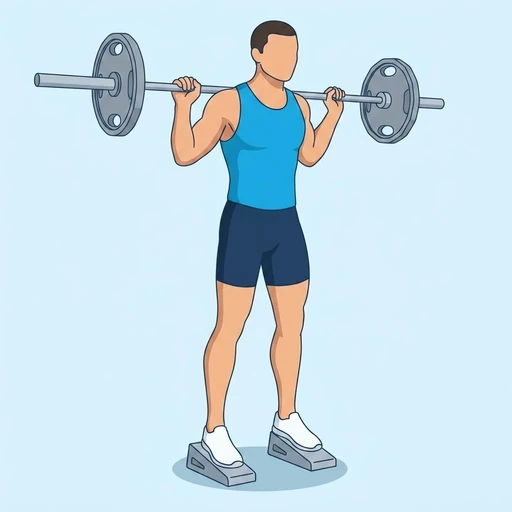
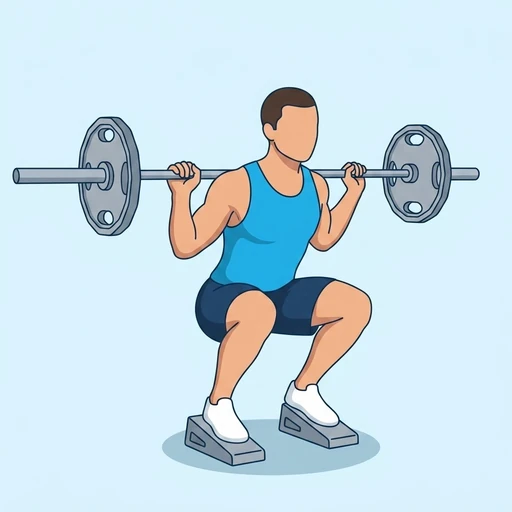
Muscles worked by the Heel-Elevated Squat
Primary
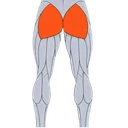 GlutesGluteus Maximus
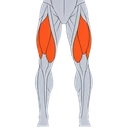 QuadsQuadriceps Femoris
Secondary
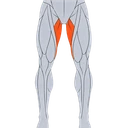 AdductorsHip Adductors
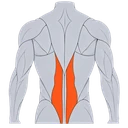 Lower BackErector Spinae
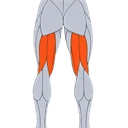 HamstringsHamstring Muscles
Also called: glute, glutes, gluteus maximus, buttocks, butt, quad.
Equipment
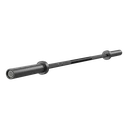 Barbell
Also called: bar, olympic barbell, straight bar, olympic bar, power bar.
How to do the Heel-Elevated Squat
- Place weight plates or a wedge under your heels, feet shoulder-width apart.
- Hold a barbell across your upper back or hold dumbbells at your sides.
- Brace your core and descend into a squat, keeping your torso upright.
- Squat until thighs are parallel to the floor or lower.
- Drive through your feet to return to the starting position.
Form tips
- The elevated heels allow a more upright torso and greater knee travel.
- Keep your knees tracking over your toes throughout.
- Start with a small heel elevation and increase as mobility improves.
At a glance
| Body part | Upper legs |
|---|---|
| Category | Strength |
| Force type | Push |
| Mechanic | Compound |
| Difficulty | Intermediate |
| Equipment | Barbell |
| Goals | Hypertrophy, Strength |
| Tags | Leg day |
| MET | 6.0 (metabolic equivalent, for calorie estimates) |
| Unilateral | No |
| Bodyweight | No |
| Dataset id | heel-elevated-squat |
Heel-Elevated Squat in German & Spanish
| German | Kniebeuge mit erhöhten Fersen |
|---|---|
| Spanish | Sentadilla con Talones Elevados |
Descriptions, instructions and tips ship in all three languages in the JSON.
Related exercises
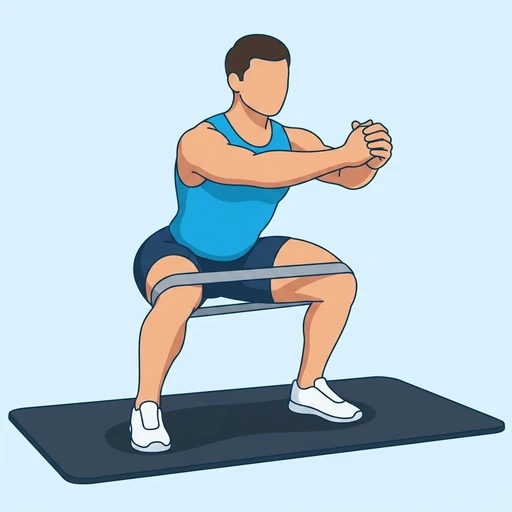 Banded Squat
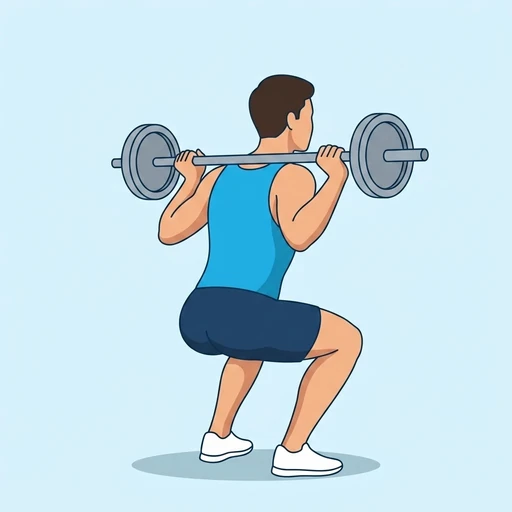 Barbell Back Squat
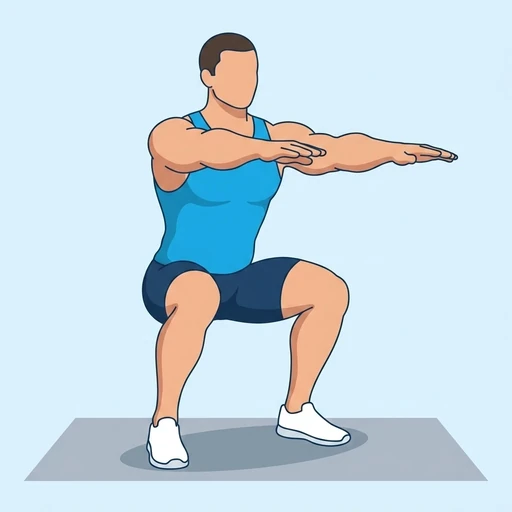 Bodyweight Squat
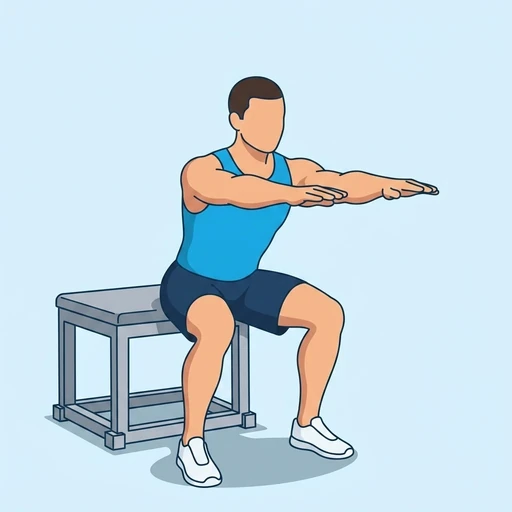 Box Squat
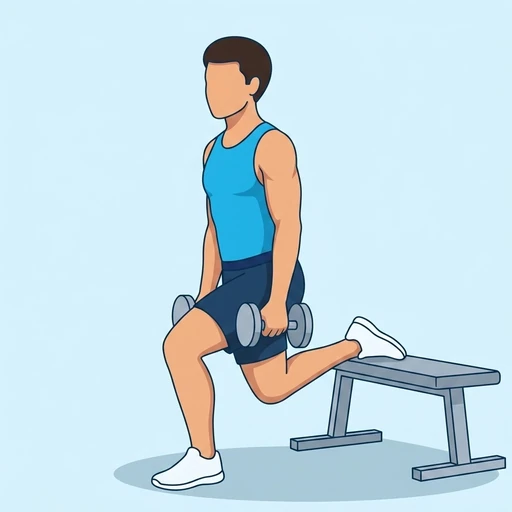 Bulgarian Split Squat
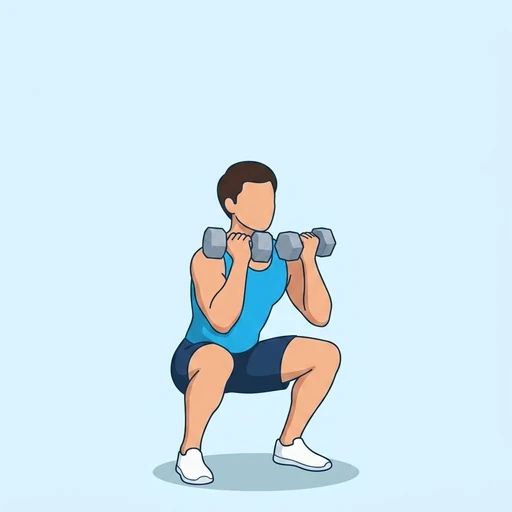 Dumbbell Front Squat
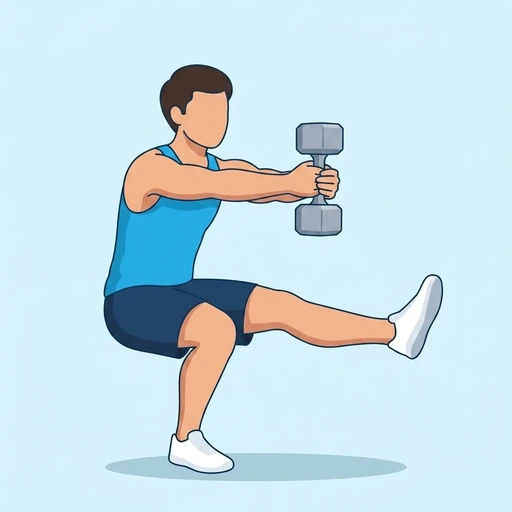 Dumbbell Pistol Squat
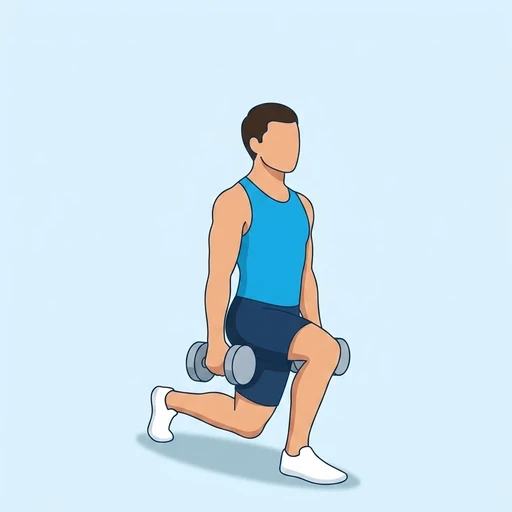 Dumbbell Split Squat
Exercise data (JSON)
The record below is exactly what exercises.json ships for this exercise — names, descriptions, instructions and tips in English, German and Spanish.
{
  "id": "heel-elevated-squat",
  "name_en": "Heel-Elevated Squat",
  "name_de": "Kniebeuge mit erhöhten Fersen",
  "name_es": "Sentadilla con Talones Elevados",
  "description_en": "A squat variation with heels raised on plates or a wedge to shift emphasis onto the quadriceps and improve depth.",
  "description_de": "Eine Kniebeugevariante mit erhöhten Fersen für mehr Quadrizepsbeteiligung und verbesserte Kniebeugetiefe.",
  "description_es": "Una variante de sentadilla con los talones elevados sobre discos para enfatizar los cuádriceps y mejorar la profundidad.",
  "category": "strength",
  "force_type": "push",
  "mechanic": "compound",
  "difficulty": "intermediate",
  "equipment": "barbell",
  "body_part": "upper_legs",
  "primary_muscles": [
    "gluteus_maximus",
    "quadriceps"
  ],
  "secondary_muscles": [
    "adductors",
    "erector_spinae",
    "hamstrings"
  ],
  "goals": [
    "hypertrophy",
    "strength"
  ],
  "tags": [
    "leg_day"
  ],
  "variation_group": "squat",
  "is_unilateral": false,
  "is_bodyweight": false,
  "instructions_en": [
    "Place weight plates or a wedge under your heels, feet shoulder-width apart.",
    "Hold a barbell across your upper back or hold dumbbells at your sides.",
    "Brace your core and descend into a squat, keeping your torso upright.",
    "Squat until thighs are parallel to the floor or lower.",
    "Drive through your feet to return to the starting position."
  ],
  "instructions_de": [
    "Stelle Gewichtsscheiben oder einen Keil unter die Fersen, Füße schulterbreit.",
    "Halte eine Hantelstange auf dem oberen Rücken oder Kurzhanteln an den Seiten.",
    "Rumpf anspannen und in die Kniebeuge absenken, Oberkörper aufrecht halten.",
    "Bis die Oberschenkel parallel zum Boden sind oder tiefer gehen.",
    "Durch die Füße drücken, um zur Ausgangsposition zurückzukehren."
  ],
  "instructions_es": [
    "Coloca discos de peso o una cuña bajo los talones, pies al ancho de los hombros.",
    "Sostén una barra en la parte superior de la espalda o mancuernas a los lados.",
    "Activa el core y baja en sentadilla manteniendo el torso erguido.",
    "Baja hasta que los muslos estén paralelos al suelo o más abajo.",
    "Empuja a través de los pies para volver a la posición inicial."
  ],
  "tips_en": [
    "The elevated heels allow a more upright torso and greater knee travel.",
    "Keep your knees tracking over your toes throughout.",
    "Start with a small heel elevation and increase as mobility improves."
  ],
  "tips_de": [
    "Die erhöhten Fersen ermöglichen einen aufrechteren Oberkörper und mehr Kniebewegung.",
    "Knie während der gesamten Übung über den Zehen halten.",
    "Mit einer kleinen Erhöhung beginnen und steigern, wenn die Mobilität zunimmt."
  ],
  "tips_es": [
    "Los talones elevados permiten un torso más erguido y mayor recorrido de rodilla.",
    "Mantén las rodillas alineadas con los dedos del pie durante todo el movimiento.",
    "Comienza con una elevación pequeña y auméntala a medida que mejore la movilidad."
  ],
  "met": 6.0,
  "images": {
    "flat": {
      "start": "images/flat/heel-elevated-squat-start.webp",
      "peak": "images/flat/heel-elevated-squat-peak.webp"
    }
  }
}
Fetch just this exercise
const { exercises } = await fetch(
  "https://exercise-dataset.com/exercises.json"
).then(r => r.json());
const ex = exercises.find(e => e.id === "heel-elevated-squat");
Free for personal and commercial in-app use with attribution (“Exercise data by RepDB”) — see the license and ready-made attribution snippets. Redistributing the data as a dataset or API is not permitted.