Kettlebell Overhead Carry
A loaded walk with a single kettlebell locked out overhead, where the bell hangs behind the wrist and pulls the arm backwards, making it harder to hold still than a dumbbell.
Shoulders · Kettlebell · Intermediate
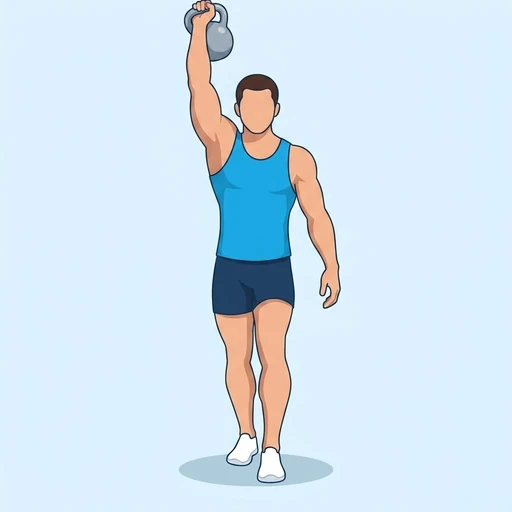
Muscles worked by the Kettlebell Overhead Carry
Primary
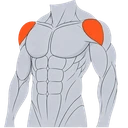 Front DeltsAnterior Deltoid
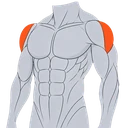 Side DeltsLateral Deltoid
Secondary
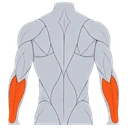 Forearm ExtensorsWrist Extensor Muscles
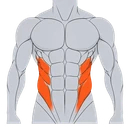 ObliquesOblique Abdominals
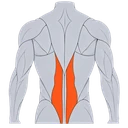 Quadratus Lumborum
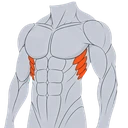 SerratusSerratus Anterior
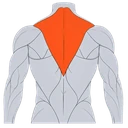 TrapsTrapezius
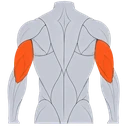 TricepsTriceps Brachii
Also called: front deltoid, anterior delt, front delt, anterior deltoid, side deltoid, lateral delt.
Equipment
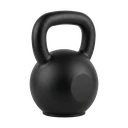 Kettlebell
Also called: kb, cast iron kettlebell, competition kettlebell, girya.
How to do the Kettlebell Overhead Carry
- Clean and press a kettlebell to lockout, letting the bell settle on the back of your forearm.
- Straighten the elbow fully and turn the arm so the bell sits behind and above your wrist rather than off to the side.
- Keep the shoulder active: push the weight up toward the ceiling and let the shoulder blade rotate up with it rather than forcing it down.
- Brace your trunk and walk forward with even strides, keeping the bell stacked over your shoulder and hip.
- Keep your wrist straight; letting it bend back is what makes an overhead bell feel unstable.
- Carry for the desired distance, lower under control, then repeat on the other side.
Form tips
- Go lighter than you would with a dumbbell. The offset mass makes the same weight noticeably harder to keep still.
- A bent wrist is the usual failure point. If it keeps collapsing, drop the weight rather than fighting it for the whole distance.
- Do both sides for the same distance — the unilateral load is the point of the exercise.
At a glance
| Body part | Shoulders |
|---|---|
| Category | Strength |
| Force type | Static |
| Mechanic | Compound |
| Difficulty | Intermediate |
| Equipment | Kettlebell |
| Goals | Strength, Endurance |
| Tags | Shoulder focus, Shoulder stability, Core, Full body |
| MET | 5.5 (metabolic equivalent, for calorie estimates) |
| Unilateral | Yes |
| Bodyweight | No |
| Dataset id | kettlebell-overhead-carry |
Kettlebell Overhead Carry in German & Spanish
| German | Kettlebell-Überkopftragen |
|---|---|
| Spanish | Paseo con Kettlebell sobre la Cabeza |
Descriptions, instructions and tips ship in all three languages in the JSON.
Related exercises
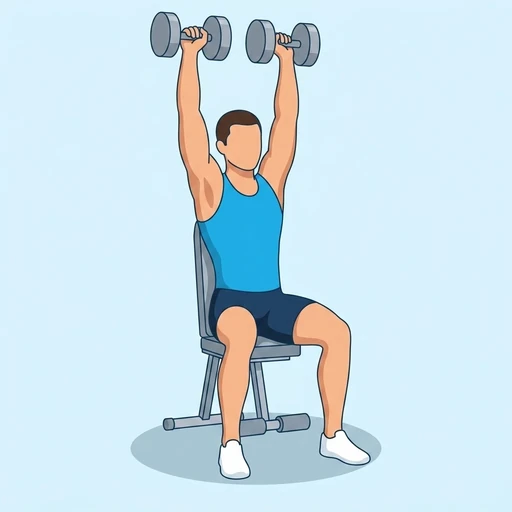 Arnold Press
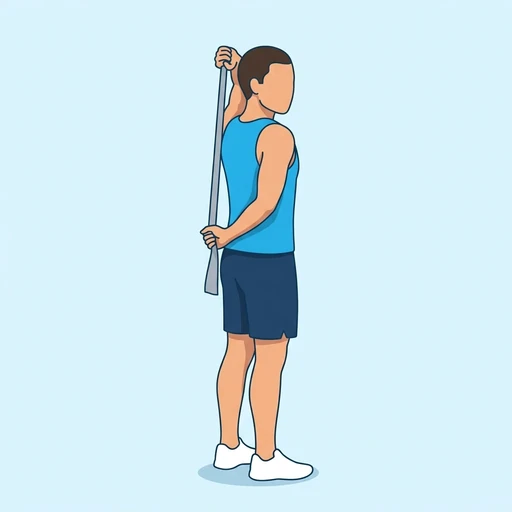 Banded Shoulder Stretch
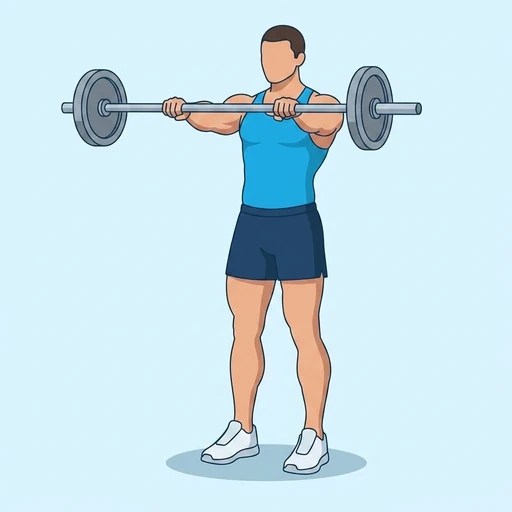 Barbell Front Raise
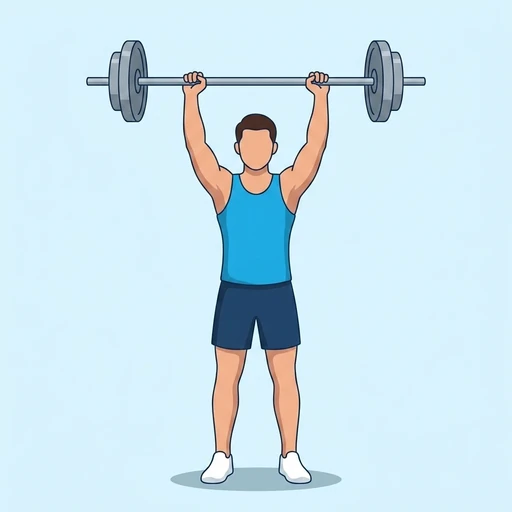 Barbell Overhead Press
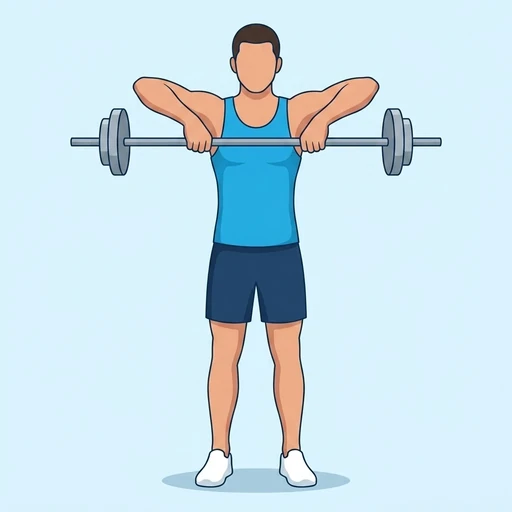 Barbell Upright Row
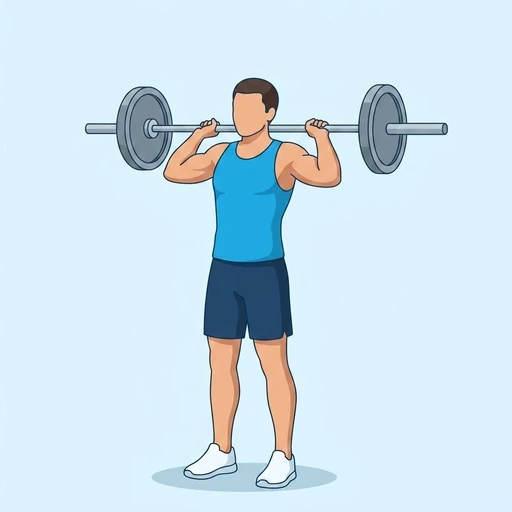 Behind the Neck Press
 Bodyweight Lateral Raise
 Bodyweight Overhead Press
Exercise data (JSON)
The record below is exactly what exercises.json ships for this exercise — names, descriptions, instructions and tips in English, German and Spanish.
{
  "id": "kettlebell-overhead-carry",
  "name_en": "Kettlebell Overhead Carry",
  "name_de": "Kettlebell-Überkopftragen",
  "name_es": "Paseo con Kettlebell sobre la Cabeza",
  "description_en": "A loaded walk with a single kettlebell locked out overhead, where the bell hangs behind the wrist and pulls the arm backwards, making it harder to hold still than a dumbbell.",
  "description_de": "Ein Tragegang mit einer einzelnen Kettlebell über dem Kopf, bei der die Kugel hinter dem Handgelenk hängt und den Arm nach hinten zieht — deutlich schwerer ruhig zu halten als eine Kurzhantel.",
  "description_es": "Un paseo cargado con una sola kettlebell bloqueada por encima de la cabeza, donde la bola cuelga por detrás de la muñeca y tira del brazo hacia atrás, lo que la hace más difícil de sostener quieta que una mancuerna.",
  "category": "strength",
  "force_type": "static",
  "mechanic": "compound",
  "difficulty": "intermediate",
  "equipment": "kettlebell",
  "body_part": "shoulders",
  "primary_muscles": [
    "anterior_deltoid",
    "lateral_deltoid"
  ],
  "secondary_muscles": [
    "forearm_extensors",
    "obliques",
    "quadratus_lumborum",
    "serratus_anterior",
    "trapezius",
    "triceps_brachii"
  ],
  "goals": [
    "strength",
    "endurance"
  ],
  "tags": [
    "shoulder_focus",
    "shoulder_stability",
    "core",
    "full_body"
  ],
  "is_unilateral": true,
  "is_bodyweight": false,
  "instructions_en": [
    "Clean and press a kettlebell to lockout, letting the bell settle on the back of your forearm.",
    "Straighten the elbow fully and turn the arm so the bell sits behind and above your wrist rather than off to the side.",
    "Keep the shoulder active: push the weight up toward the ceiling and let the shoulder blade rotate up with it rather than forcing it down.",
    "Brace your trunk and walk forward with even strides, keeping the bell stacked over your shoulder and hip.",
    "Keep your wrist straight; letting it bend back is what makes an overhead bell feel unstable.",
    "Carry for the desired distance, lower under control, then repeat on the other side."
  ],
  "instructions_de": [
    "Bring eine Kettlebell im Umsetzen und Drücken nach oben und lass die Kugel auf dem Unterarmrücken zur Ruhe kommen.",
    "Streck den Ellenbogen ganz durch und dreh den Arm so, dass die Kugel hinter und über dem Handgelenk sitzt, nicht seitlich daneben.",
    "Halte die Schulter aktiv: Schieb das Gewicht Richtung Decke und lass das Schulterblatt nach oben mitdrehen, statt es nach unten zu zwingen.",
    "Spann den Rumpf an und geh mit gleichmäßigen Schritten vorwärts, die Kugel über Schulter und Hüfte gestapelt.",
    "Halt das Handgelenk gerade; ein abknickendes Handgelenk ist der Grund, warum sich eine Kugel über Kopf instabil anfühlt.",
    "Trag die gewünschte Distanz, setz kontrolliert ab und wiederhol auf der anderen Seite."
  ],
  "instructions_es": [
    "Lleva una kettlebell en cargada y press hasta el bloqueo, dejando que la bola se asiente sobre el dorso del antebrazo.",
    "Estira el codo del todo y gira el brazo para que la bola quede por detrás y por encima de la muñeca, no desplazada a un lado.",
    "Mantén el hombro activo: empuja el peso hacia el techo y deja que la escápula rote hacia arriba con él en lugar de forzarla hacia abajo.",
    "Aprieta el tronco y camina hacia delante con zancadas regulares, con la bola alineada sobre hombro y cadera.",
    "Mantén la muñeca recta; dejar que se doble hacia atrás es lo que hace que una kettlebell arriba se sienta inestable.",
    "Carga la distancia deseada, baja de forma controlada y repite por el otro lado."
  ],
  "tips_en": [
    "Go lighter than you would with a dumbbell. The offset mass makes the same weight noticeably harder to keep still.",
    "A bent wrist is the usual failure point. If it keeps collapsing, drop the weight rather than fighting it for the whole distance.",
    "Do both sides for the same distance — the unilateral load is the point of the exercise."
  ],
  "tips_de": [
    "Nimm weniger Gewicht als mit der Kurzhantel. Die versetzte Masse macht dasselbe Gewicht spürbar schwerer ruhig zu halten.",
    "Das Handgelenk ist die übliche Schwachstelle. Wenn es immer wieder einknickt, geh mit dem Gewicht runter, statt die ganze Strecke dagegen anzukämpfen.",
    "Mach beide Seiten über dieselbe Distanz — die einseitige Belastung ist der Sinn der Übung."
  ],
  "tips_es": [
    "Usa menos peso que con mancuerna. La masa descentrada hace que el mismo kilaje cueste bastante más de sostener quieto.",
    "La muñeca doblada es el fallo habitual. Si se te vence una y otra vez, baja el peso en lugar de pelear con él todo el recorrido.",
    "Haz ambos lados la misma distancia — la carga unilateral es el sentido del ejercicio."
  ],
  "met": 5.5,
  "images": {
    "flat": {
      "main": "images/flat/kettlebell-overhead-carry-main.webp"
    }
  }
}
Fetch just this exercise
const { exercises } = await fetch(
  "https://exercise-dataset.com/exercises.json"
).then(r => r.json());
const ex = exercises.find(e => e.id === "kettlebell-overhead-carry");
Free for personal and commercial in-app use with attribution (“Exercise data by RepDB”) — see the license and ready-made attribution snippets. Redistributing the data as a dataset or API is not permitted.