Sled Row
A loaded carry-and-pull performed by gripping a sled and rowing it toward you as you walk backwards, training the back through a continuous drag rather than discrete reps.
Back · Sled · Intermediate
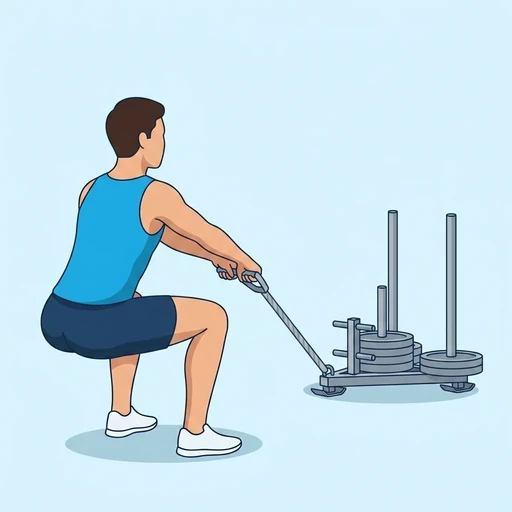
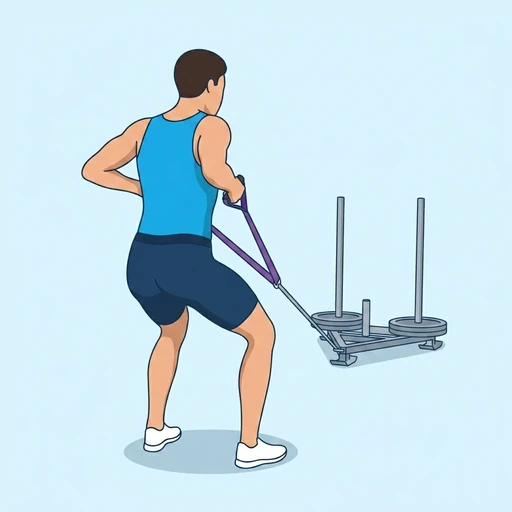
Muscles worked by the Sled Row
Primary
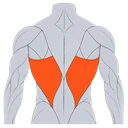 LatsLatissimus Dorsi
Secondary
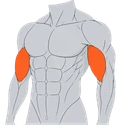 BicepsBiceps Brachii
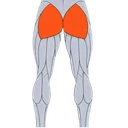 GlutesGluteus Maximus
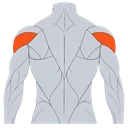 Rear DeltsPosterior Deltoid
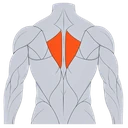 RhomboidsRhomboid Muscles
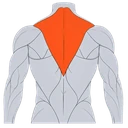 TrapsTrapezius
Also called: lats, lat, latissimus dorsi, latissimus, back wings.
Equipment
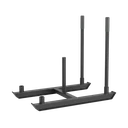 Sled
SledAlso called: prowler, push sled, pull sled, weight sled, dog sled.
How to do the Sled Row
- Load a sled and grip its uprights with both hands, one to each post.
- Stand facing the sled with the arms extended and the torso leaned back slightly against the load.
- Pull the sled toward you by driving the elbows back, and take a short step backwards as you do.
- Extend the arms again, step back once more, and repeat the pull.
- Continue for distance or time, keeping a steady pull-and-step rhythm.
Form tips
- Keep the chest up and the back flat — let the legs carry you backwards rather than rounding over the sled.
- Use a load you can move continuously; the point is a steady drag, not a maximal pull.
- Handles or a rope attached to the sled work the same way if your gym has them.
At a glance
| Body part | Back |
|---|---|
| Category | Strength |
| Force type | Pull |
| Mechanic | Compound |
| Difficulty | Intermediate |
| Equipment | Sled |
| Goals | Strength, Endurance |
| Tags | Pull day |
| MET | 6.0 (metabolic equivalent, for calorie estimates) |
| Unilateral | No |
| Bodyweight | No |
| Dataset id | sled-row |
Sled Row in German & Spanish
| German | Sled Row |
|---|---|
| Spanish | Remo con Trineo |
Descriptions, instructions and tips ship in all three languages in the JSON.
Related exercises
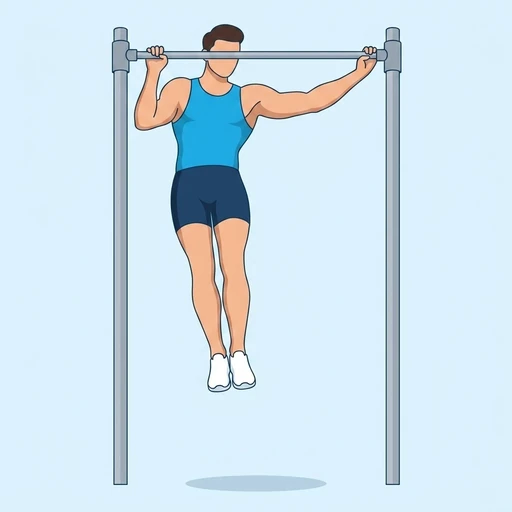 Archer Pull Ups
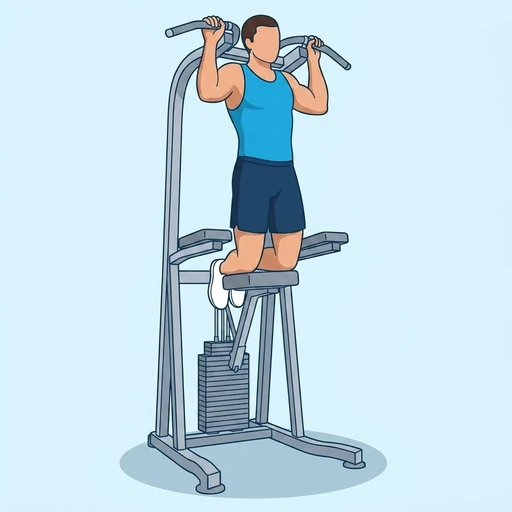 Assisted Pull Ups
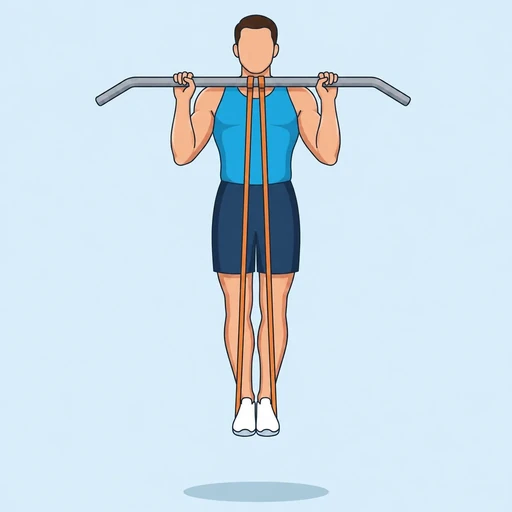 Band Assisted Pull Ups
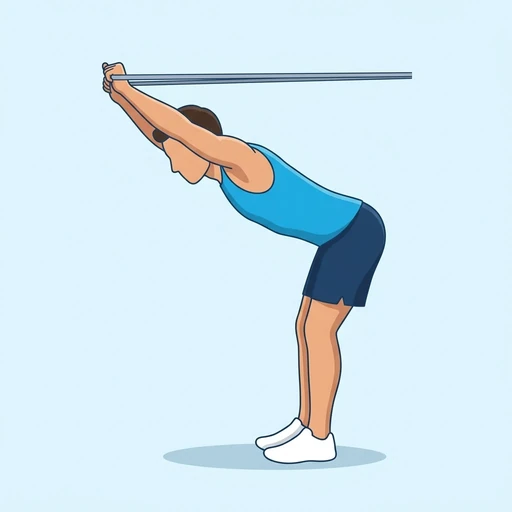 Banded Lat Stretch
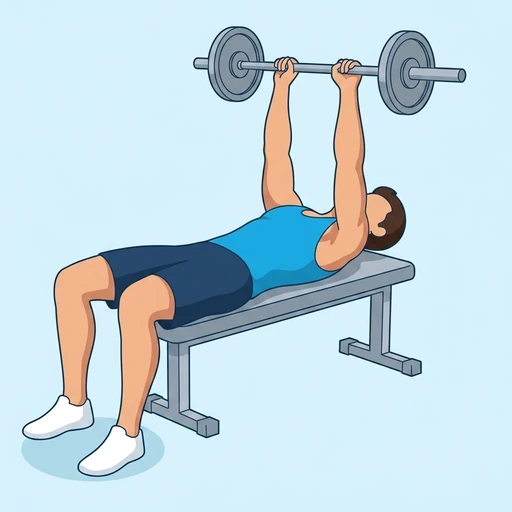 Barbell Pullover
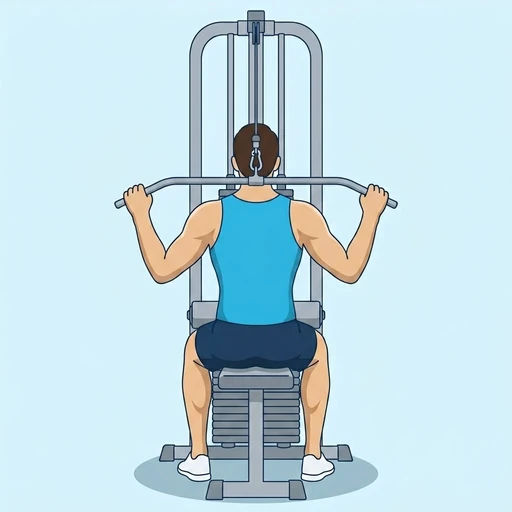 Behind-the-Neck Lat Pulldown
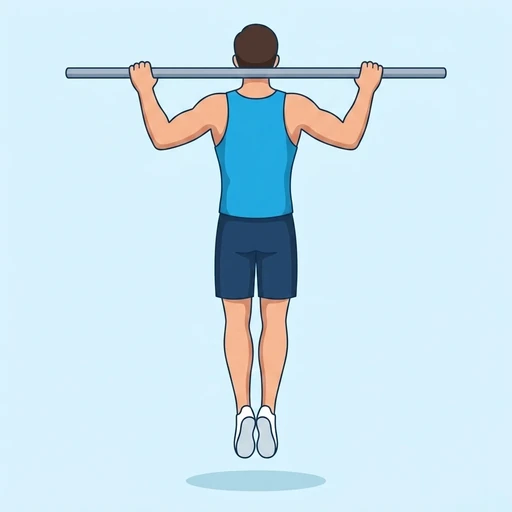 Behind-the-Neck Pull-Up
 Bench Child's Pose
Exercise data (JSON)
The record below is exactly what exercises.json ships for this exercise — names, descriptions, instructions and tips in English, German and Spanish.
{
  "id": "sled-row",
  "name_en": "Sled Row",
  "name_de": "Sled Row",
  "name_es": "Remo con Trineo",
  "description_en": "A loaded carry-and-pull performed by gripping a sled and rowing it toward you as you walk backwards, training the back through a continuous drag rather than discrete reps.",
  "description_de": "Ein Zug unter Last: Du greifst den Schlitten, ziehst ihn zu dir und gehst dabei rückwärts — der Rücken arbeitet im Dauerzug statt in einzelnen Wiederholungen.",
  "description_es": "Un remo con carga: agarras el trineo y lo tiras hacia ti mientras caminas hacia atrás, trabajando la espalda con un arrastre continuo en lugar de repeticiones sueltas.",
  "category": "strength",
  "force_type": "pull",
  "mechanic": "compound",
  "difficulty": "intermediate",
  "equipment": "sled",
  "body_part": "back",
  "primary_muscles": [
    "latissimus_dorsi"
  ],
  "secondary_muscles": [
    "biceps_brachii",
    "gluteus_maximus",
    "posterior_deltoid",
    "rhomboids",
    "trapezius"
  ],
  "goals": [
    "strength",
    "endurance"
  ],
  "tags": [
    "pull_day"
  ],
  "is_unilateral": false,
  "is_bodyweight": false,
  "instructions_en": [
    "Load a sled and grip its uprights with both hands, one to each post.",
    "Stand facing the sled with the arms extended and the torso leaned back slightly against the load.",
    "Pull the sled toward you by driving the elbows back, and take a short step backwards as you do.",
    "Extend the arms again, step back once more, and repeat the pull.",
    "Continue for distance or time, keeping a steady pull-and-step rhythm."
  ],
  "instructions_de": [
    "Belade den Schlitten und greife seine Streben mit beiden Händen, je eine Hand pro Pfosten.",
    "Stelle dich mit gestreckten Armen zum Schlitten und lehne den Oberkörper leicht gegen die Last zurück.",
    "Zieh den Schlitten zu dir, indem du die Ellbogen nach hinten führst, und mache dabei einen kurzen Schritt rückwärts.",
    "Strecke die Arme wieder, mache noch einen Schritt zurück und wiederhole den Zug.",
    "Mach auf Strecke oder Zeit weiter und halte einen gleichmäßigen Rhythmus aus Zug und Schritt."
  ],
  "instructions_es": [
    "Carga el trineo y agarra sus postes con ambas manos, una en cada poste.",
    "Ponte de pie frente al trineo con los brazos estirados y el torso ligeramente inclinado hacia atrás contra la carga.",
    "Tira del trineo hacia ti llevando los codos atrás y da un paso corto hacia atrás al mismo tiempo.",
    "Estira los brazos de nuevo, da otro paso atrás y repite el tirón.",
    "Continúa por distancia o por tiempo, manteniendo un ritmo constante de tirón y paso."
  ],
  "tips_en": [
    "Keep the chest up and the back flat — let the legs carry you backwards rather than rounding over the sled.",
    "Use a load you can move continuously; the point is a steady drag, not a maximal pull.",
    "Handles or a rope attached to the sled work the same way if your gym has them."
  ],
  "tips_de": [
    "Brust raus und Rücken gerade — lass dich von den Beinen nach hinten tragen, statt dich über den Schlitten zu runden.",
    "Wähle ein Gewicht, das du durchgehend bewegen kannst; es geht um den gleichmäßigen Zug, nicht um maximale Kraft.",
    "Griffe oder ein Seil am Schlitten funktionieren genauso, wenn dein Gym so etwas hat."
  ],
  "tips_es": [
    "Pecho arriba y espalda recta: deja que las piernas te lleven hacia atrás en vez de encorvarte sobre el trineo.",
    "Usa una carga que puedas mover de forma continua; la idea es un arrastre constante, no un tirón máximo.",
    "Si tu gimnasio tiene asas o una cuerda para el trineo, funcionan igual."
  ],
  "met": 6.0,
  "images": {
    "flat": {
      "start": "images/flat/sled-row-start.webp",
      "peak": "images/flat/sled-row-peak.webp"
    }
  }
}
Fetch just this exercise
const { exercises } = await fetch(
  "https://exercise-dataset.com/exercises.json"
).then(r => r.json());
const ex = exercises.find(e => e.id === "sled-row");
Free for personal and commercial in-app use with attribution (“Exercise data by RepDB”) — see the license and ready-made attribution snippets. Redistributing the data as a dataset or API is not permitted.