Straight-Bar Cable Front Raise
A front raise on a low cable pulley with a straight bar attachment held in both hands. Unlike the one-armed cable front raise, both arms drive the same bar, and the cable keeps tension on the front delts through the whole range.
Shoulders · Cable Machine · Intermediate
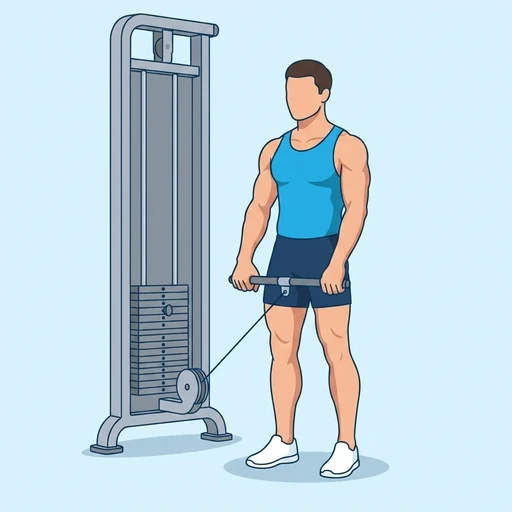
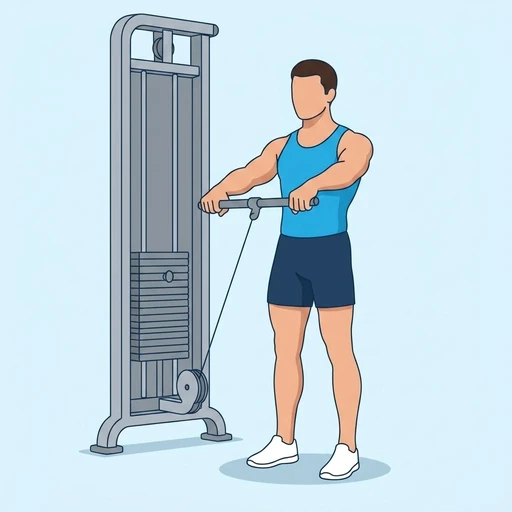
Muscles worked by the Straight-Bar Cable Front Raise
Primary
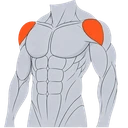 Front DeltsAnterior Deltoid
Secondary
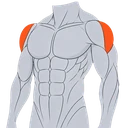 Side DeltsLateral Deltoid
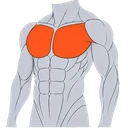 ChestPectoralis Major
Also called: front deltoid, anterior delt, front delt, anterior deltoid.
Equipment
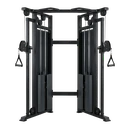 Cable Machine
Also called: cable pulley, functional trainer, cable crossover, cable column, cable station, pulley machine.
How to do the Straight-Bar Cable Front Raise
- Attach a straight bar to a low cable pulley and stand facing away from the machine with the cable running forward past your legs.
- Hold the bar with an overhand grip, hands about shoulder-width apart, arms hanging straight down in front of your thighs.
- Keep the elbows almost straight and the core braced so the torso does not lean back.
- Raise the bar forward in a smooth arc until it reaches shoulder height.
- Lower it under control back to the thighs and repeat for the desired number of repetitions.
Form tips
- Use a light weight — swinging the bar up with the legs or leaning back takes the work off the front delts.
- Stop at shoulder height; raising the bar higher shifts the load onto the traps.
- Keep the wrists neutral rather than letting them bend back under the bar.
At a glance
| Body part | Shoulders |
|---|---|
| Category | Strength |
| Force type | Push |
| Mechanic | Isolation |
| Difficulty | Intermediate |
| Equipment | Cable Machine |
| Goals | Hypertrophy |
| Tags | Knee safe, No axial load, Lower back safe, Shoulder safe |
| MET | 5.0 (metabolic equivalent, for calorie estimates) |
| Unilateral | No |
| Bodyweight | No |
| Dataset id | straight-bar-cable-front-raise |
Straight-Bar Cable Front Raise in German & Spanish
| German | Frontheben am Kabelzug mit gerader Stange |
|---|---|
| Spanish | Elevación frontal en polea con barra recta |
Descriptions, instructions and tips ship in all three languages in the JSON.
Related exercises
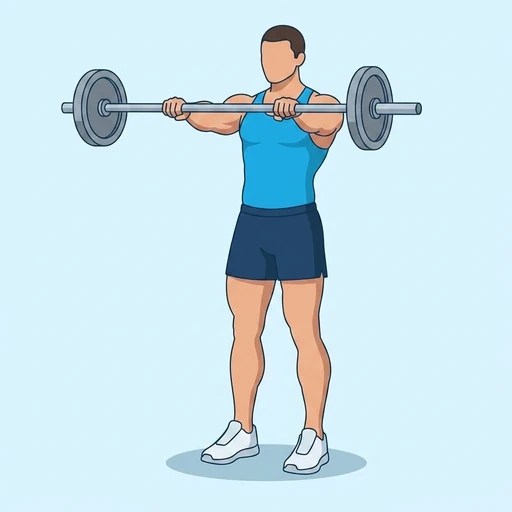 Barbell Front Raise
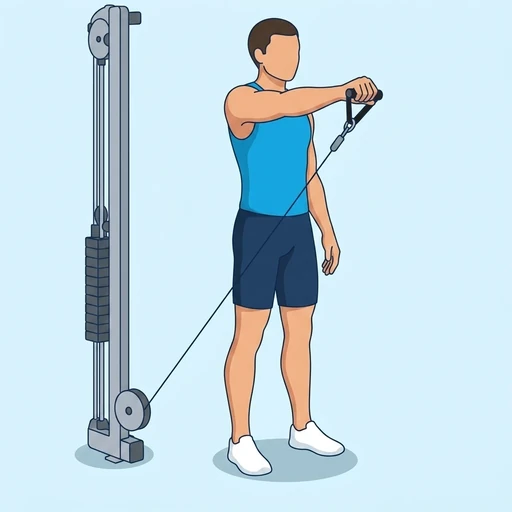 Cable Front Raise
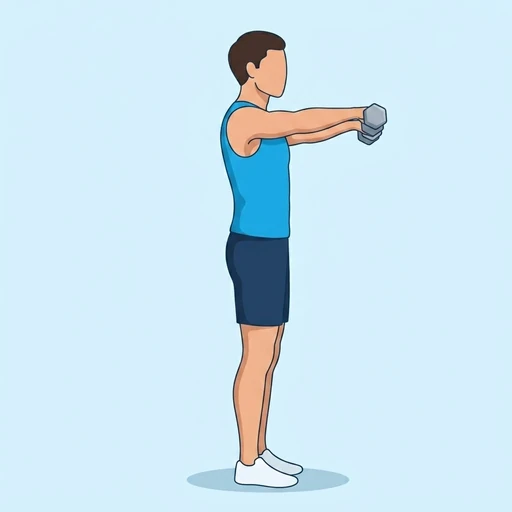 Dumbbell Front Raise
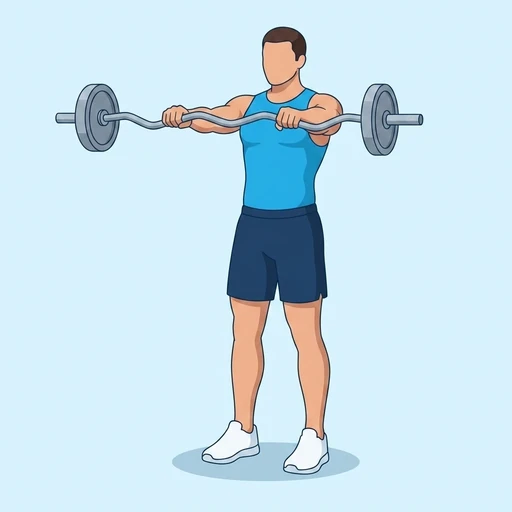 EZ-Bar Front Raise
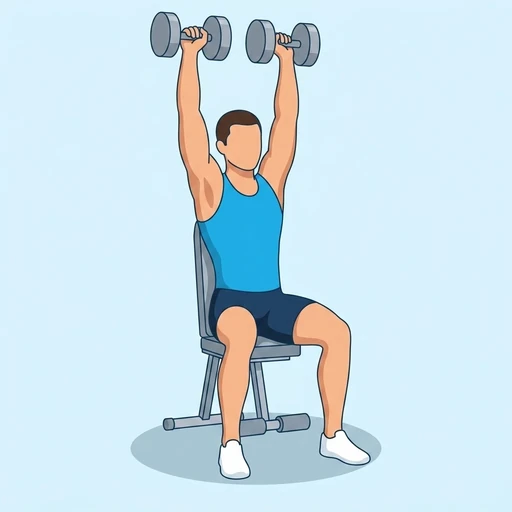 Arnold Press
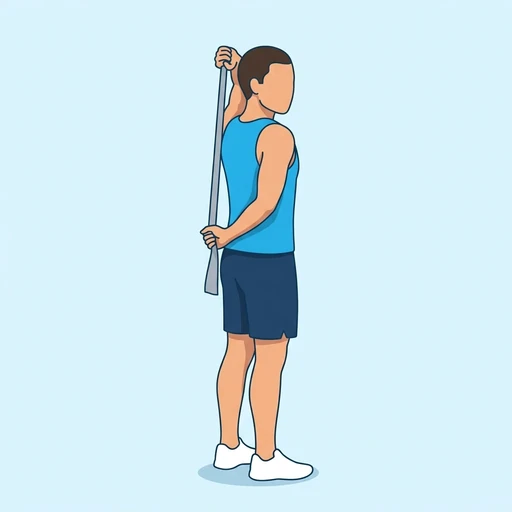 Banded Shoulder Stretch
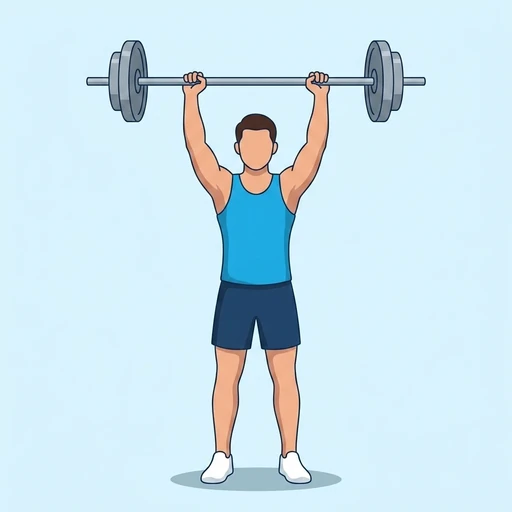 Barbell Overhead Press
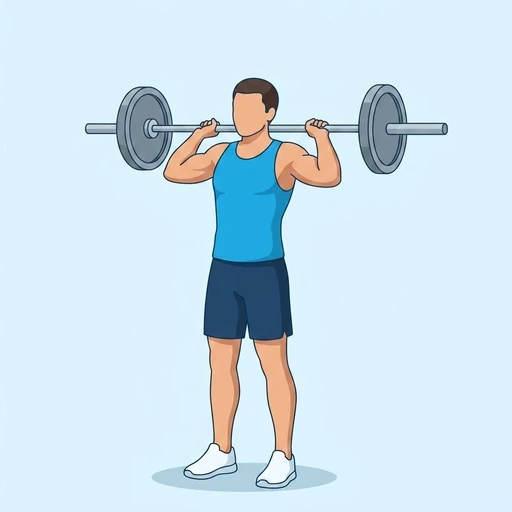 Behind the Neck Press
Exercise data (JSON)
The record below is exactly what exercises.json ships for this exercise — names, descriptions, instructions and tips in English, German and Spanish.
{
  "id": "straight-bar-cable-front-raise",
  "name_en": "Straight-Bar Cable Front Raise",
  "name_de": "Frontheben am Kabelzug mit gerader Stange",
  "name_es": "Elevación frontal en polea con barra recta",
  "description_en": "A front raise on a low cable pulley with a straight bar attachment held in both hands. Unlike the one-armed cable front raise, both arms drive the same bar, and the cable keeps tension on the front delts through the whole range.",
  "description_de": "Ein Frontheben am unteren Kabelzug, bei dem eine gerade Stange mit beiden Händen gehalten wird. Anders als beim einarmigen Frontheben am Kabelzug führen beide Arme dieselbe Stange, und das Kabel hält die vordere Schulter über den gesamten Bewegungsumfang unter Spannung.",
  "description_es": "Una elevación frontal en la polea baja sujetando una barra recta con ambas manos. A diferencia de la elevación frontal en polea a un brazo, los dos brazos mueven la misma barra y el cable mantiene la tensión sobre el deltoides anterior en todo el recorrido.",
  "category": "strength",
  "force_type": "push",
  "mechanic": "isolation",
  "difficulty": "intermediate",
  "equipment": "cable",
  "body_part": "shoulders",
  "primary_muscles": [
    "anterior_deltoid"
  ],
  "secondary_muscles": [
    "lateral_deltoid",
    "pectoralis_major"
  ],
  "goals": [
    "hypertrophy"
  ],
  "tags": [
    "knee_safe",
    "no_axial_load",
    "lower_back_safe",
    "shoulder_safe"
  ],
  "variation_group": "front-raise",
  "is_unilateral": false,
  "is_bodyweight": false,
  "instructions_en": [
    "Attach a straight bar to a low cable pulley and stand facing away from the machine with the cable running forward past your legs.",
    "Hold the bar with an overhand grip, hands about shoulder-width apart, arms hanging straight down in front of your thighs.",
    "Keep the elbows almost straight and the core braced so the torso does not lean back.",
    "Raise the bar forward in a smooth arc until it reaches shoulder height.",
    "Lower it under control back to the thighs and repeat for the desired number of repetitions."
  ],
  "instructions_de": [
    "Befestige eine gerade Stange am unteren Kabelzug und stell dich mit dem Rücken zum Gerät, sodass das Kabel vorn an den Beinen vorbeiläuft.",
    "Greif die Stange im Obergriff etwa schulterbreit, die Arme hängen gestreckt vor den Oberschenkeln.",
    "Halte die Ellbogen nahezu gestreckt und den Rumpf angespannt, damit der Oberkörper sich nicht zurücklehnt.",
    "Heb die Stange in einem gleichmäßigen Bogen nach vorn bis auf Schulterhöhe.",
    "Senk sie kontrolliert zurück zu den Oberschenkeln und wiederhole für die gewünschte Anzahl an Wiederholungen."
  ],
  "instructions_es": [
    "Engancha una barra recta a la polea baja y colócate de espaldas a la máquina, con el cable pasando por delante de las piernas.",
    "Sujeta la barra en pronación con las manos a la anchura de los hombros y los brazos colgando estirados delante de los muslos.",
    "Mantén los codos casi extendidos y el core firme para que el torso no se incline hacia atrás.",
    "Eleva la barra hacia delante en un arco suave hasta la altura de los hombros.",
    "Bájala de forma controlada hasta los muslos y repite las repeticiones deseadas."
  ],
  "tips_en": [
    "Use a light weight — swinging the bar up with the legs or leaning back takes the work off the front delts.",
    "Stop at shoulder height; raising the bar higher shifts the load onto the traps.",
    "Keep the wrists neutral rather than letting them bend back under the bar."
  ],
  "tips_de": [
    "Nimm ein leichtes Gewicht — Schwung aus den Beinen oder Zurücklehnen nimmt die Arbeit von der vorderen Schulter.",
    "Stopp auf Schulterhöhe; höher zu heben verlagert die Last auf den Trapezmuskel.",
    "Halte die Handgelenke neutral, statt sie unter der Stange abknicken zu lassen."
  ],
  "tips_es": [
    "Usa poco peso: impulsar la barra con las piernas o inclinarte hacia atrás quita el trabajo al deltoides anterior.",
    "Detente a la altura de los hombros; subir más traslada la carga al trapecio.",
    "Mantén las muñecas neutras en lugar de dejar que se doblen bajo la barra."
  ],
  "met": 5.0,
  "images": {
    "flat": {
      "start": "images/flat/straight-bar-cable-front-raise-start.webp",
      "peak": "images/flat/straight-bar-cable-front-raise-peak.webp"
    }
  }
}
Fetch just this exercise
const { exercises } = await fetch(
  "https://exercise-dataset.com/exercises.json"
).then(r => r.json());
const ex = exercises.find(e => e.id === "straight-bar-cable-front-raise");
Free for personal and commercial in-app use with attribution (“Exercise data by RepDB”) — see the license and ready-made attribution snippets. Redistributing the data as a dataset or API is not permitted.