Weighted Pull-Up
A pull-up performed with extra load — most often a plate hung from a dip belt between the legs — to keep the movement in a strength rep range once bodyweight pull-ups are easy.
Back · Pull-Up Bar · Advanced
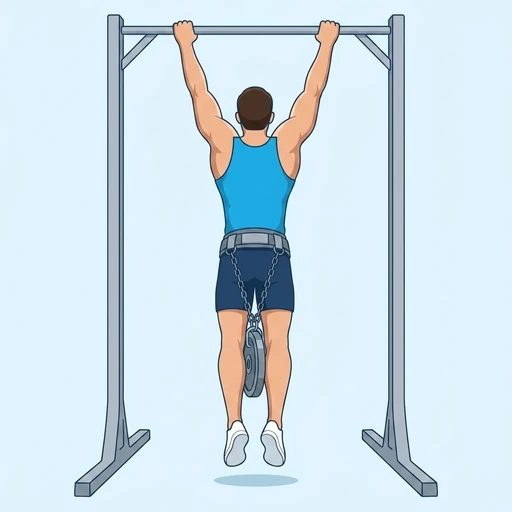
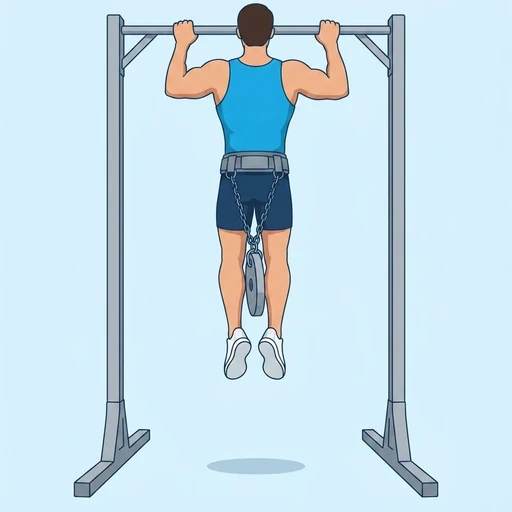
Muscles worked by the Weighted Pull-Up
Primary
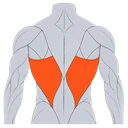 LatsLatissimus Dorsi
Secondary
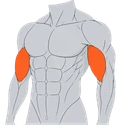 BicepsBiceps Brachii
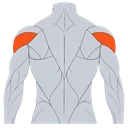 Rear DeltsPosterior Deltoid
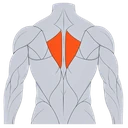 RhomboidsRhomboid Muscles
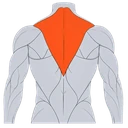 TrapsTrapezius
Also called: lats, lat, latissimus dorsi, latissimus, back wings.
Equipment
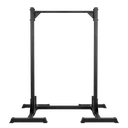 Pull-Up Bar
Also called: chin-up bar, chin up bar, power tower, pull up bar, doorway bar.
How to do the Weighted Pull-Up
- Attach a plate to a dip belt around your waist so the weight hangs between your legs, or hold the load between your feet.
- Grip the pull-up bar with an overhand grip slightly wider than shoulder-width and hang at full arm extension with your legs together.
- Pull your elbows down and back to drive your chest toward the bar until your chin clears it.
- Lower yourself under control back to the full dead hang, keeping tension on your lats and letting the weight settle before the next rep.
- Repeat for the desired number of reps.
Form tips
- Add weight only once you can do clean bodyweight pull-ups through a full range — small jumps of 2.5–5 kg are enough, since the load stacks on top of your own bodyweight.
- Keep your legs together and your core braced so the hanging plate does not start swinging; a swinging weight turns the rep into a kip.
- Do not cut the bottom short — return to a full dead hang each rep, and stop the set when your chin stops clearing the bar rather than grinding out partials.
At a glance
| Body part | Back |
|---|---|
| Category | Strength |
| Force type | Pull |
| Mechanic | Compound |
| Difficulty | Advanced |
| Equipment | Pull-Up Bar |
| Goals | Strength, Hypertrophy |
| Tags | Pull day, Knee safe, No axial load, Lower back safe, Shoulder safe |
| MET | 6.0 (metabolic equivalent, for calorie estimates) |
| Unilateral | No |
| Bodyweight | No |
| Dataset id | weighted-pull-up |
Weighted Pull-Up in German & Spanish
| German | Klimmzug mit Zusatzgewicht |
|---|---|
| Spanish | Dominada Lastrada |
Descriptions, instructions and tips ship in all three languages in the JSON.
Related exercises
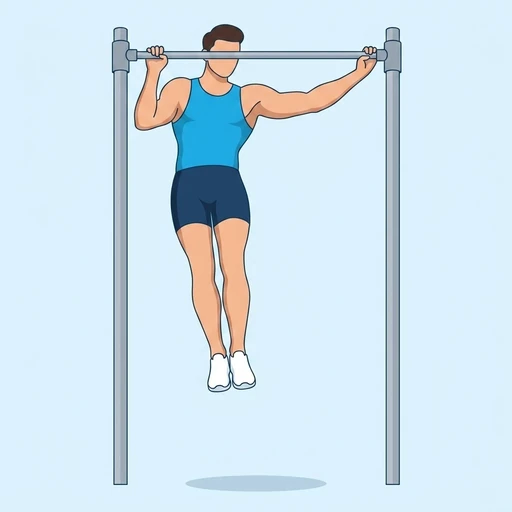 Archer Pull Ups
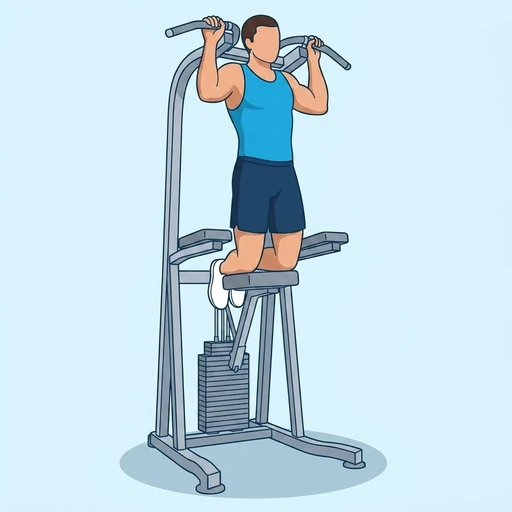 Assisted Pull Ups
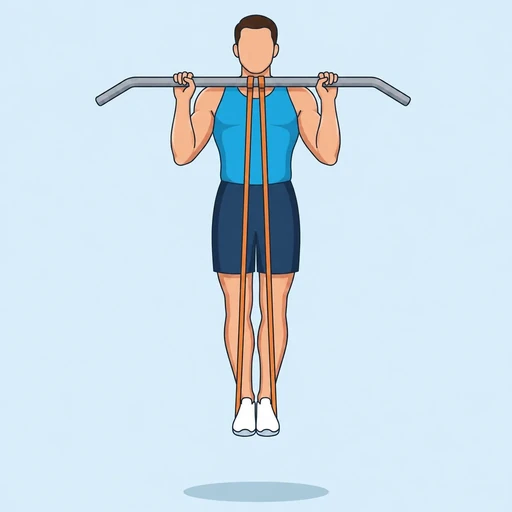 Band Assisted Pull Ups
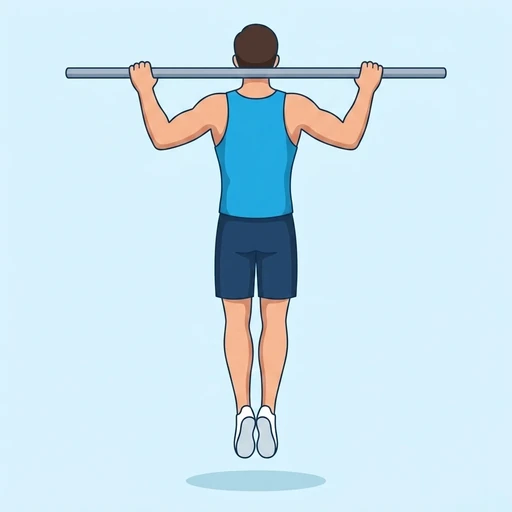 Behind-the-Neck Pull-Up
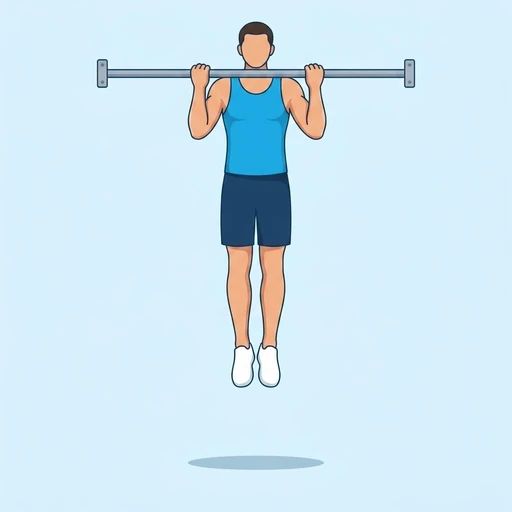 Chin-Ups
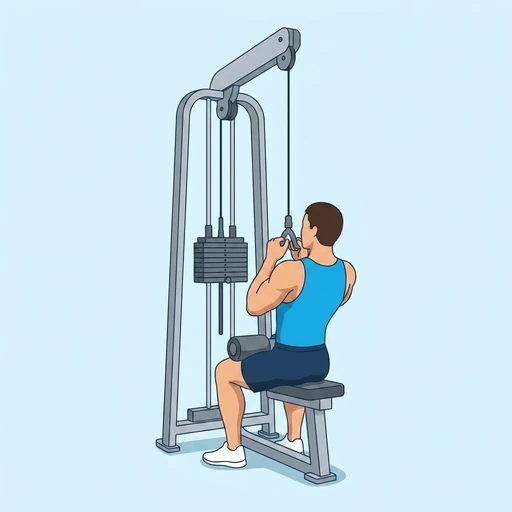 Close Grip Lat Pulldown
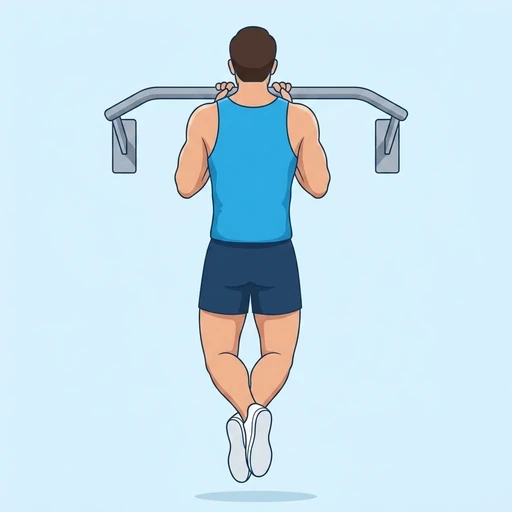 Close-Grip Pull-Ups
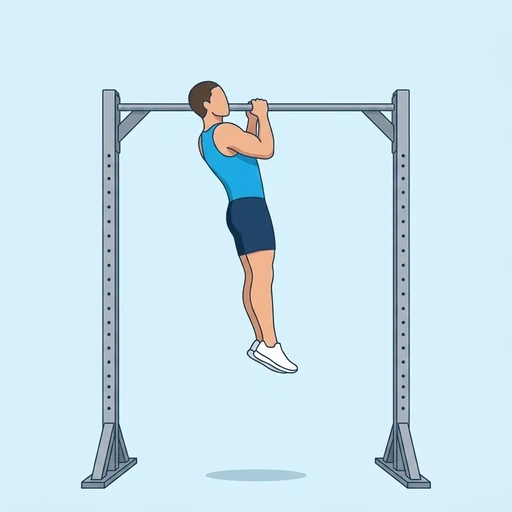 Commando Pull-Up
Exercise data (JSON)
The record below is exactly what exercises.json ships for this exercise — names, descriptions, instructions and tips in English, German and Spanish.
{
  "id": "weighted-pull-up",
  "name_en": "Weighted Pull-Up",
  "name_de": "Klimmzug mit Zusatzgewicht",
  "name_es": "Dominada Lastrada",
  "description_en": "A pull-up performed with extra load — most often a plate hung from a dip belt between the legs — to keep the movement in a strength rep range once bodyweight pull-ups are easy.",
  "description_de": "Ein Klimmzug mit zusätzlicher Last — meist eine Hantelscheibe, die an einem Dipgürtel zwischen den Beinen hängt —, damit die Übung im Kraftbereich bleibt, sobald Klimmzüge mit dem eigenen Körpergewicht leicht fallen.",
  "description_es": "Una dominada con carga añadida — normalmente un disco colgado de un cinturón de lastre entre las piernas — para mantener el ejercicio en un rango de fuerza cuando las dominadas con el propio peso ya resultan fáciles.",
  "category": "strength",
  "force_type": "pull",
  "mechanic": "compound",
  "difficulty": "advanced",
  "equipment": "pull_up_bar",
  "body_part": "back",
  "primary_muscles": [
    "latissimus_dorsi"
  ],
  "secondary_muscles": [
    "biceps_brachii",
    "posterior_deltoid",
    "rhomboids",
    "trapezius"
  ],
  "goals": [
    "strength",
    "hypertrophy"
  ],
  "tags": [
    "pull_day",
    "knee_safe",
    "no_axial_load",
    "lower_back_safe",
    "shoulder_safe"
  ],
  "variation_group": "pull-up",
  "is_unilateral": false,
  "is_bodyweight": false,
  "instructions_en": [
    "Attach a plate to a dip belt around your waist so the weight hangs between your legs, or hold the load between your feet.",
    "Grip the pull-up bar with an overhand grip slightly wider than shoulder-width and hang at full arm extension with your legs together.",
    "Pull your elbows down and back to drive your chest toward the bar until your chin clears it.",
    "Lower yourself under control back to the full dead hang, keeping tension on your lats and letting the weight settle before the next rep.",
    "Repeat for the desired number of reps."
  ],
  "instructions_de": [
    "Häng eine Hantelscheibe in den Dipgürtel und leg ihn so um die Hüfte, dass das Gewicht frei zwischen den Beinen hängt — alternativ klemmst du die Last zwischen die Füße.",
    "Greif die Klimmzugstange im Obergriff etwas weiter als schulterbreit und häng dich mit gestreckten Armen und geschlossenen Beinen aus.",
    "Zieh die Ellbogen nach unten und hinten und bring die Brust Richtung Stange, bis das Kinn über der Stange ist.",
    "Lass dich kontrolliert bis in den vollen Hang zurück, halte die Spannung im Latissimus und lass das Gewicht ausschwingen, bevor die nächste Wiederholung startet.",
    "Wiederhole für die gewünschte Anzahl an Wiederholungen."
  ],
  "instructions_es": [
    "Cuelga un disco del cinturón de lastre y ajústalo a la cintura de modo que el peso quede suelto entre las piernas; también puedes sujetar la carga entre los pies.",
    "Agarra la barra en pronación algo más abierto que la anchura de los hombros y cuélgate con los brazos estirados y las piernas juntas.",
    "Tira de los codos hacia abajo y hacia atrás llevando el pecho hacia la barra hasta que la barbilla la supere.",
    "Baja de forma controlada hasta la suspensión completa, mantén la tensión en los dorsales y deja que el peso se estabilice antes de la siguiente repetición.",
    "Repite el número de repeticiones deseado."
  ],
  "tips_en": [
    "Add weight only once you can do clean bodyweight pull-ups through a full range — small jumps of 2.5–5 kg are enough, since the load stacks on top of your own bodyweight.",
    "Keep your legs together and your core braced so the hanging plate does not start swinging; a swinging weight turns the rep into a kip.",
    "Do not cut the bottom short — return to a full dead hang each rep, and stop the set when your chin stops clearing the bar rather than grinding out partials."
  ],
  "tips_de": [
    "Nimm erst Gewicht dazu, wenn saubere Klimmzüge über den vollen Bewegungsumfang sitzen — 2,5 bis 5 kg pro Schritt reichen, denn die Last kommt auf das eigene Körpergewicht obendrauf.",
    "Halte die Beine zusammen und den Rumpf fest, damit die hängende Scheibe nicht ins Schwingen kommt; ein schwingendes Gewicht macht aus der Wiederholung einen Kipping-Klimmzug.",
    "Kürz die untere Position nicht ab — geh bei jeder Wiederholung in den vollen Hang zurück und beende den Satz, sobald das Kinn nicht mehr über die Stange kommt, statt halbe Wiederholungen zu erzwingen."
  ],
  "tips_es": [
    "Añade peso solo cuando hagas dominadas limpias con el propio peso en todo el recorrido: saltos de 2,5 a 5 kg son suficientes, porque la carga se suma a tu propio peso corporal.",
    "Mantén las piernas juntas y el core apretado para que el disco colgante no empiece a balancearse; un peso que oscila convierte la repetición en un kipping.",
    "No recortes la parte baja: vuelve a la suspensión completa en cada repetición y termina la serie cuando la barbilla deje de superar la barra, en lugar de forzar repeticiones parciales."
  ],
  "met": 6.0,
  "images": {
    "flat": {
      "start": "images/flat/weighted-pull-up-start.webp",
      "peak": "images/flat/weighted-pull-up-peak.webp"
    }
  }
}
Fetch just this exercise
const { exercises } = await fetch(
  "https://exercise-dataset.com/exercises.json"
).then(r => r.json());
const ex = exercises.find(e => e.id === "weighted-pull-up");
Free for personal and commercial in-app use with attribution (“Exercise data by RepDB”) — see the license and ready-made attribution snippets. Redistributing the data as a dataset or API is not permitted.